
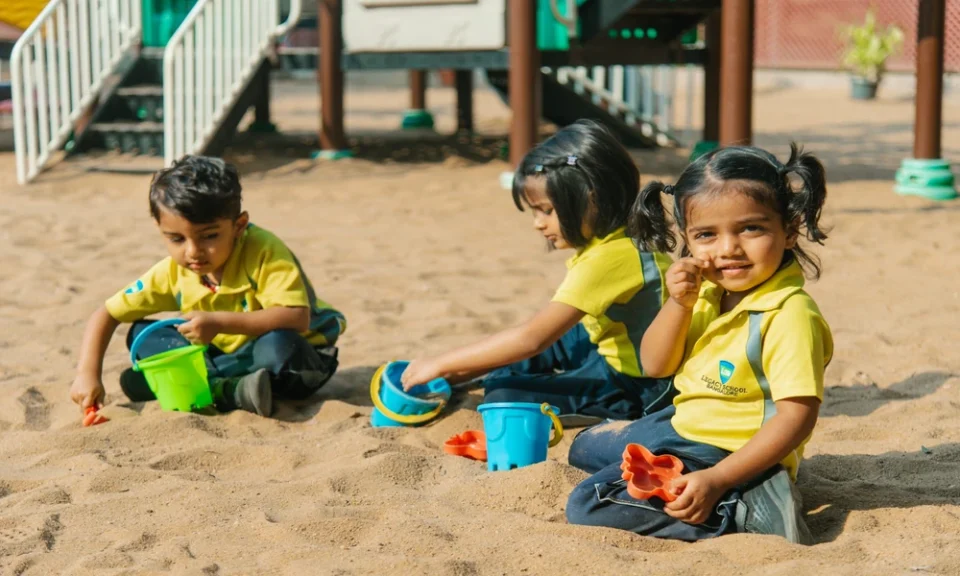
Connecting young minds with the natural world forms a vital part of early years development. This educational philosophy recognises that a child’s growth flourishes through direct experience.
Dr. Maria Montessori saw the outdoor environment as an essential extension of the indoor classroom. She believed it offered a unique space where children explore with genuine curiosity and purpose.
Integrating a montessori outdoor approach creates thoughtfully designed spaces. These areas foster a young child’s independence and nurture a deep, lasting love for discovery.
Modern early years provision now prioritises this connection. It ensures every child has rich, daily opportunities to learn through interaction with their surroundings.
Key Takeaways
- Engagement with the natural world provides a structured and purposeful foundation for early development.
- The outside area is viewed as a crucial extension of the indoor learning space.
- This method strongly encourages independence and self-directed discovery.
- Sensory development is actively promoted through hands-on interaction with materials.
- Contemporary nurseries place a high value on integrating nature into the daily routine.
- The aim is to cultivate a meaningful and enriching start to a child’s educational journey.
Introduction to Outdoor Learning in Montessori Nursery Settings
The integration of external spaces into early years education is not a modern trend but a core principle with a rich history. This concept has evolved from pioneering work over a century ago.
Understanding the Concept
In 1911, Dr. Maria Montessori published her seminal work, The Montessori Method. It contained a dedicated chapter on nature’s role in a child’s education.
Her research was influenced by earlier figures like Jean Itard. Itard studied the unique bond the ‘Wild Boy of Aveyron’ had with his surroundings.
| Figure | Key Contribution | Lasting Impact |
|---|---|---|
| Maria Montessori | Published The Montessori Method (1911) emphasising nature. | Established the need for children to observe the world directly. |
| Jean Itard | Observed the Wild Boy of Aveyron’s outdoor relationship. | Inspired theories on development through environmental interaction. |
| Barbara Isaacs | Academic director of Montessori Centre International. | Highlights that play in external spaces has always been central. |
The learning potential of outdoor play has been at the heart of the practice since its inception.
The Role of Nature in Child Development
Today, educators recognise these rich experiences as essential for cognitive and emotional growth. Sensory exploration and nature-based play provide vital opportunities.
Fostering a deep connection to the natural world helps young minds. It builds crucial observation skills and critical thinking for life.
The Montessori Philosophy and the Natural Environment
Central to this educational vision is the belief that direct contact with creation educates the soul. The natural environment is not a separate subject but the very medium for holistic growth.
Holistic Child Development through Nature
Maria Montessori observed that when children come into contact with nature, they reveal hidden strength. This direct experience is fundamental to their development.
Watching seeds sprout or leaves change teaches patience. It builds a sense of time and future responsibility. These are essential skills for life.
Lessons from Maria Montessori’s Teachings
No image in a book can replace the sight of real trees and the interrelated life found in a forest.
She believed in placing the soul of the child in contact with creation. This allows them to treasure the educating forces of living nature.
These profound experiences foster a deep love and respect for the world. They help children develop a mindful connection through careful observation.
Designing Authentic Montessori Outdoor Spaces
Thoughtful design transforms an external area into a rich landscape for discovery, autonomy, and hands-on experience. This approach moves beyond simple play to create purposeful environments aligned with core educational principles.
Incorporating Natural Materials and Child-Sized Tools
Authentic spaces prioritise natural elements like wood, stone, and living plants. These materials create a calming atmosphere that invites exploration and deepens a child‘s connection to the world.
Providing properly scaled tools is essential. Small rakes, trowels, and watering cans empower children. They can take responsibility for tasks like gardening, fostering independence and pride.
Zones are clearly organised for different activities. A dedicated plot for growing things, a sensory path, and an area for motor skills all have their place. This structure gives experiences focus while allowing for spontaneous creativity.
Through this careful design, development is supported. Young minds build practical skills and sharpen their observation in a safe, inspiring outdoor environment.
Key Outdoor Activities for Holistic Development
From tending gardens to observing wildlife, specific tasks cultivate both practical abilities and inner qualities. These pursuits are integral to a child’s growth, offering rich experiences that align with core educational principles. Historical examples illustrate this well.
At the Children’s House in Rome, youngsters cultivated their own plots, learning about plant cycles. In Milan, caring for pigeons taught empathy and patience.
Sensory Exploration and Practical Life Skills
Sensory gardens with lavender or mint engage the senses. Children collect leaves and feel different textures.
Practical tasks like watering plants or using child-sized tools build responsibility. These activities foster independence and a connection to the living world.
Encouraging Motor Skills and Scientific Inquiry
Digging pits or using balance beams develops gross motor skills. Physical coordination improves through such play.
Scientific curiosity is sparked by using magnifying glasses to inspect insects. Counting leaves introduces basic maths and observation skills.
Fostering Creativity and Social Interaction
Creative expression flourishes in natural spaces. Building with loose parts or imaginative role-play encourages creativity.
Group projects, like creating a communal garden, promote social interaction and teamwork. They teach valuable life skills.
| Activity Focus | Example | Key Developmental Benefit |
|---|---|---|
| Sensory & Practical | Gardening with child-sized tools | Builds responsibility, fine motor skills, and sensory awareness. |
| Motor & Scientific | Using a balance beam or magnifying glass | Enhances physical coordination and fosters scientific inquiry. |
| Creative & Social | Collaborative nature art projects | Promotes creativity, teamwork, and communication skills. |
Creating a Safe and Inspiring Outdoor Environment
A truly effective external space for young learners must prioritise both physical safety and boundless inspiration. This dual focus is central to the montessori outdoor approach, ensuring children feel secure enough to engage fully with their surroundings.
Balancing Structure with Spontaneity
Well-planned spaces offer a mix of guided activities and open-ended play. For example, a scheduled gardening session teaches responsibility, while a loose-parts area invites imaginative exploration.
This balance is evident at Eilmar Montessori. Their team designs experiences that scaffold skills while leaving room for a child‘s own discoveries.
Promoting Connection with the Environment
Safety measures, like non-toxic plants and secure boundaries, are essential. They allow children to develop independence as they interact with the world.
Through these intentional choices, Eilmar fosters a deep connection to nature. This encourages young people to become caring stewards of the Earth.
| Design Aspect | Structured Element | Spontaneous Opportunity | Primary Benefit |
|---|---|---|---|
| Planting Area | Scheduled watering and weeding tasks | Free exploration of soil and insects | Teaches life cycles and responsibility |
| Play Space | Provision of climbing frames and balance beams | Imaginative games using natural materials | Develops motor skills and creativity |
| Sensory Zone | Guided identification of textures and scents | Child-led collection and sorting of leaves and stones | Enhances sensory awareness and observation |
Conclusion
As Tiffany Liddell, an AMI 3-6 Trainer, emphasises, these spaces allow youngsters to apply the ‘keys to the universe’ in real contexts. They form a vital bridge between classroom concepts and tangible reality.
By creating engaging natural settings, educators help children develop remarkable resilience and self-reliance. This fosters an enduring love for discovery that lasts a lifetime.
Through this deep connection, young people gain the confidence to navigate the wider world. They begin to understand their own role within a global ecosystem.
We encourage all early years providers to embrace these core principles. Doing so ensures every child can thrive in a supportive and inspiring natural environment.
