
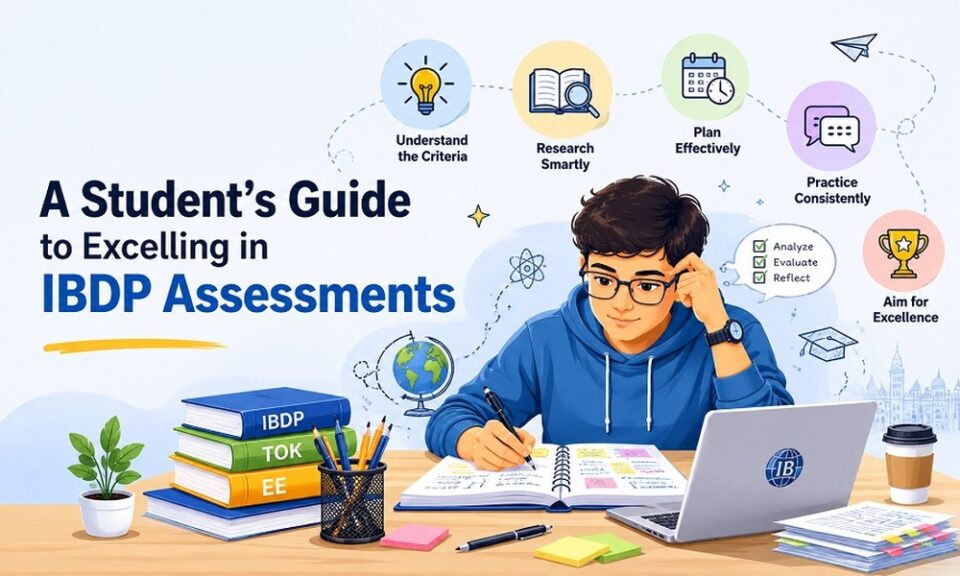
The International Baccalaureate Diploma Programme is known for its academic depth, balanced curriculum, and strong focus on analytical thinking. Students pursuing the IBDP are expected to manage multiple subjects, internal assessments, research projects, and final examinations simultaneously. While the programme may appear demanding at first, the right approach can help students perform confidently and achieve excellent results.
Success in the IBDP depends on consistency, planning, and understanding how assessments are structured. Students who learn to manage their time effectively and build strong study habits often find the experience rewarding and intellectually enriching. The IBDP encourages learners to think independently, communicate clearly, and apply knowledge practically, making assessment preparation more meaningful.
One of the first steps toward excelling in IBDP assessments is understanding the difference between internal and external evaluations. Internal assessments are conducted during the academic year and may include experiments, presentations, essays, investigations, and oral tasks. External assessments mainly consist of final examinations evaluated by external examiners. Both contribute significantly to final grades, so students should treat every assignment seriously.
Time management plays a major role in IBDP success. Since students study six subjects along with Theory of Knowledge, the Extended Essay, and Creativity Activity Service requirements, maintaining a structured schedule is essential. Breaking larger tasks into smaller weekly goals can reduce stress and improve productivity. Students who avoid last-minute preparation often produce better quality work and feel more confident during assessments.
Creating effective study techniques is equally important. Instead of memorizing information, IBDP students should focus on conceptual understanding. The programme values critical thinking, application of ideas, and analytical writing. Revising through summaries, flashcards, practice questions, and peer discussions can improve retention and deepen understanding. Active learning methods often work better than passive reading alone.
Past papers are among the most valuable resources for IBDP preparation. Solving previous exam questions helps students understand paper patterns, question styles, and marking expectations. It also improves time management during exams. Practicing under timed conditions can build confidence and reduce anxiety before final assessments.
Students should also pay close attention to assessment criteria. Every subject in the IBDP follows detailed rubrics that explain how marks are awarded. Understanding these criteria helps students structure answers more effectively and focus on what examiners expect. Whether writing essays, completing science investigations, or preparing oral presentations, aligning work with assessment objectives can significantly improve performance.
Strong writing skills are another major advantage in the IBDP. Many subjects require students to explain ideas clearly, evaluate arguments, and present evidence logically. Students can strengthen their writing by practicing essay outlines, improving vocabulary, and developing concise arguments. Reviewing teacher feedback carefully can also help identify areas for improvement.
Stress management is equally important during assessment periods. Maintaining healthy routines, getting enough sleep, and taking regular breaks can improve concentration and academic performance. Students should avoid comparing themselves constantly with others and instead focus on personal growth and steady improvement. A balanced mindset often leads to better long-term results.
Collaboration can also enhance learning in the IBDP. Study groups, classroom discussions, and peer feedback sessions can expose students to different perspectives and clarify difficult concepts. Explaining topics to others is also an effective way to reinforce understanding. Seeking guidance from teachers whenever challenges arise can further support academic progress.
Technology can be a helpful tool for IBDP students when used wisely. Digital planners, note-taking apps, online quizzes, and educational videos can simplify revision and organization. However, maintaining discipline and minimizing distractions is essential to staying productive.
Ultimately, excelling in IBDP assessments is not about perfection but about consistency, preparation, and resilience. Students who stay organized, engage actively with their subjects, and develop strong analytical skills often perform well across all components of the programme. The IBDP experience helps students build confidence, independence, and academic discipline that continue to benefit them beyond school. By approaching assessments with focus and determination, students can achieve meaningful success in the IBDP journey.
