
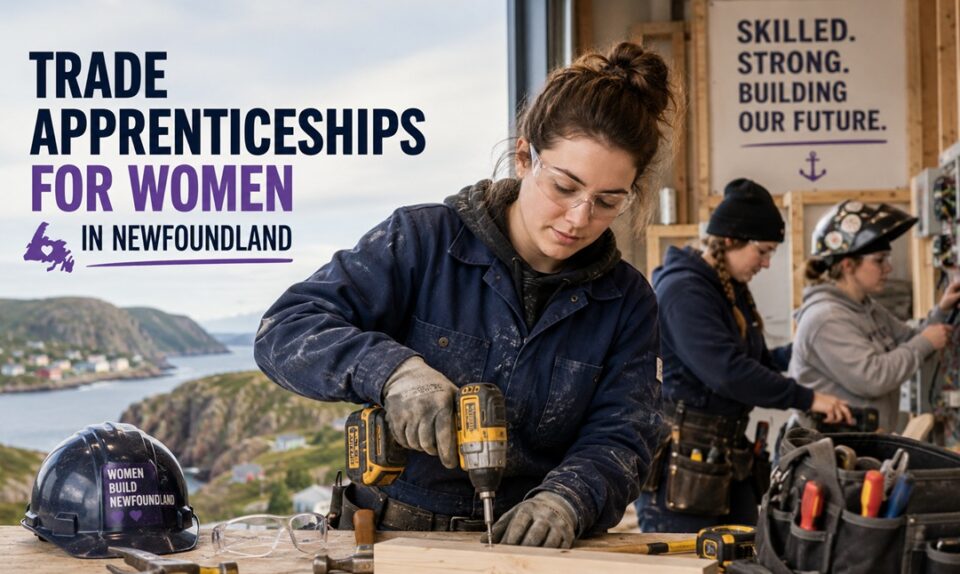
A Story That Matters: What Prompted More Women to Consider Trades in NL
When the Lower Churchill hydroelectric project ramped up through the 2010s, Newfoundland and Labrador faced an acute skilled trades shortage. Project managers couldn’t find enough qualified ironworkers, electricians, pipefitters, and millwrights to meet schedule. That pressure opened conversations about workforce diversity that hadn’t moved much in previous decades — and a noticeable, if gradual, shift began. Women who entered apprenticeship programs in that period found themselves entering a trades culture that was, out of necessity, becoming more accommodating.
The legacy of that period is visible today. The proportion of women in registered apprenticeships in Newfoundland has grown, industry groups are more intentional about recruitment, and support systems that didn’t exist a decade ago are now operational.
What That Experience Taught the Industry
The most consistent finding from women who entered trades apprenticeships in Newfoundland during and after that construction boom: employer attitudes matter more than program design. Women who landed with progressive employers — shops where gender wasn’t a daily conversation, where mentorship was practical rather than performative — completed their apprenticeships at significantly higher rates than those who were placed in less supportive environments.
That insight has shaped how programs are now structured. The Trades NL initiative and partnerships with the Newfoundland and Labrador Construction Association have moved toward employer screening as part of how women are placed, rather than simply registering people and hoping for the best.
Current Programs and Support Structures in Newfoundland
The Apprenticeship and Trades Certification Division of the provincial government is the formal entry point for registered apprenticeship in any Red Seal trade in Newfoundland. The process: complete the pre-apprenticeship requirements for your chosen trade (which vary), find a sponsoring employer, register as an apprentice, and progress through the four or five levels of your trade program.
For women specifically, the Trades Into Our Workforce (TIOW) program has been active in Newfoundland and offers pre-employment trades training with a direct pathway to apprenticeship. The program covers introduction to multiple trades, basic tool skills, and workplace safety before placement — reducing the learning curve that can make first weeks on a job site overwhelming.
The Province’s Women in Trades bursary provides financial support that offsets some of the income reduction during technical training blocks. This is meaningful for women who are primary earners or who are making a career change in mid-life — the financial barrier to apprenticeship (where you work at apprentice wages while also paying for technical training) is real, and bursary access changes the calculation.
Honest Recommendations for Women Considering This Path in NL
- Research your specific trade before committing. Electricians, plumbers, and instrumentation technicians generally experience better culture shifts than some other trades. It varies.
- Connect with Women in Skilled Trades NL before you start. Peer connections with women who are one or two levels ahead of you in apprenticeship are worth more than any orientation session.
- Ask potential sponsoring employers direct questions. ‘How many female apprentices have you had?’ and ‘Do you currently have any women on your crew?’ are fair questions that tell you a lot.
- Use the financial supports available. The bursary, Employment Insurance during technical training blocks, and any employer education benefits all exist — don’t leave them unused because navigating applications seems complicated.
- Expect an adjustment period. The first six months are hard for most apprentices regardless of gender. That normalcy is worth knowing going in.
Newfoundland’s trades sector needs workers. That need creates real leverage for anyone willing to enter a program — and the support infrastructure for women specifically has improved enough to make this a legitimate career path, not just an ambitious one.
